

This was a conversation I (Kristy) have had with a few folks. Do you book in advance for where you sleep or wing it?
Well, in Nepal in spring and summer I think you can wing it (on the popular trails even). But in Europe, in peak season, in valleys where you’d need to ask the landowner to camp? When you’re tired after 30+km and 2,000m of elevation and it’s hot? No thanks.
We also couldn’t wing it on the Great Divide Trail; way too many days and nights passing through National Parks.
So for the Via Alpina we opted to book most of the way. Yes it sets a schedule for 2,000km, and it feels a bit structured. But heck we love spreadsheets, so no problem there.
Pros of booking ahead
- Guaranteed place to sleep at the end of the day
- Less stress searching for accommodation while tired
- Saves phone battery and time on trail
- Avoids last-minute language barriers while calling (and doesn’t assume connectivity is available)
- Secures spots in popular huts and hostels that fill up early
- Easier to budget with accommodation costs known in advance
- Helps maintain a steady and realistic hiking pace
Cons of booking ahead
- Less flexibility to change distances, routes, or rest days
- Pressure to keep moving despite bad weather, fatigue, or injury
- Cancellation fees and rebooking can become complicated
- Requires significant planning before the trip
- Limits spontaneity and unexpected discoveries
- A disrupted schedule can affect multiple future bookings
There is no right answer to this. Some folks love winging it and complete their goal. Some folks like booking abead and reach their goal. But neither approach is perfect.
It’s just a compromise; everything in life is a compromise if you think about it.
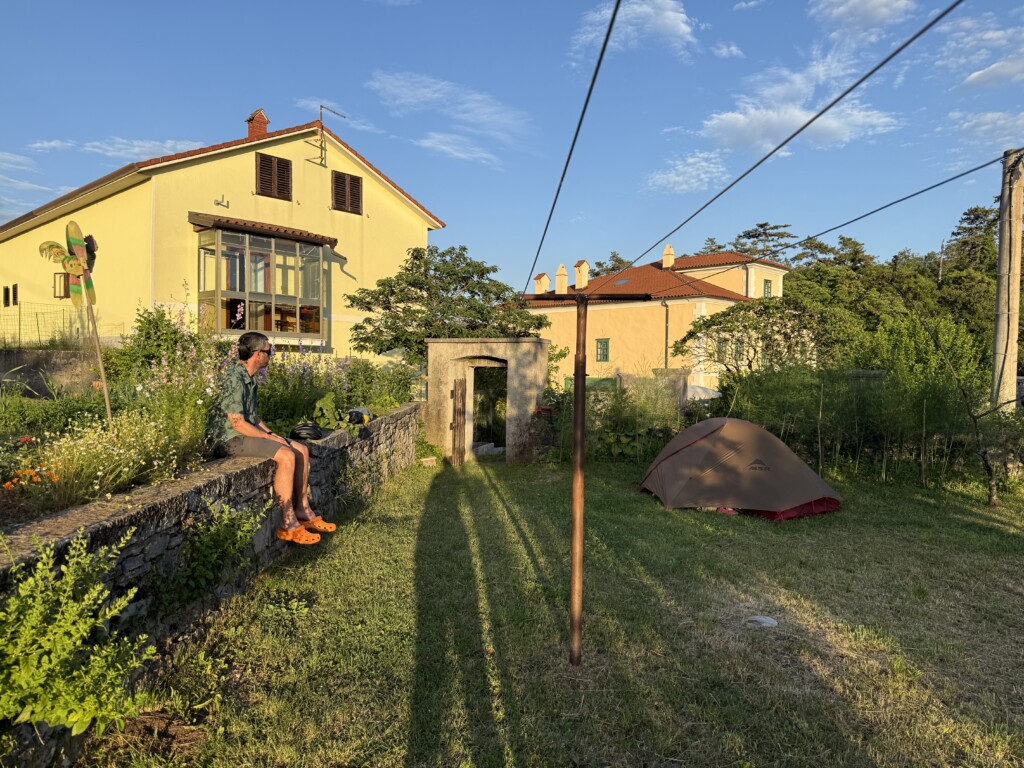
I also think it depends on your trip budget. Even the alpine huts here (and in Canada) can be too expensive for folks thru-hiking on a serious budget. We budgeted to stay in 65% accommodation and 35% tent (some of those tent nights are in campgrounds like Grindelwald).
More broadly, I don’t believe in special treatment in the mountains – the trail belongs to everyone. But experienced thru-hikers do tend to be highly respectful of the land, low-impact, and deeply committed to leaving no trace. Navigating the rules that come with heavily managed corridors is simply another part of the journey.
What sits less easily with me is being on a trail where the systems designed to manage visitor numbers can price some people out entirely. That’s a harder problem than booking ahead versus winging it.