
Mountain huts. They are like people. All shapes, sizes, ages, characteristics, preferences, atmospheres.
Before the Via Alpina we’d stayed in plenty of New Zealand alpine huts, and a handful of backcountry cabins in Canada. On this trip our eyes have been opened by the culture, history, and experience of the European huts.
We are yet to stay in a hut in Switzerland or France. Perhaps they will be different again, so this blog focuses on experiences from Slovenia, Austria, Italy and Germany.
Arriving (on time!)
Firstly, most if not all have an arrival time requirement. Typically 6pm. You can call if you will arrive after 6pm, but it’s not uncommon to be out of cell range. Other huts have landlines you could use in a pinch. But we have stuck to the arrival time requirement and made it each time so far!
Sleeping
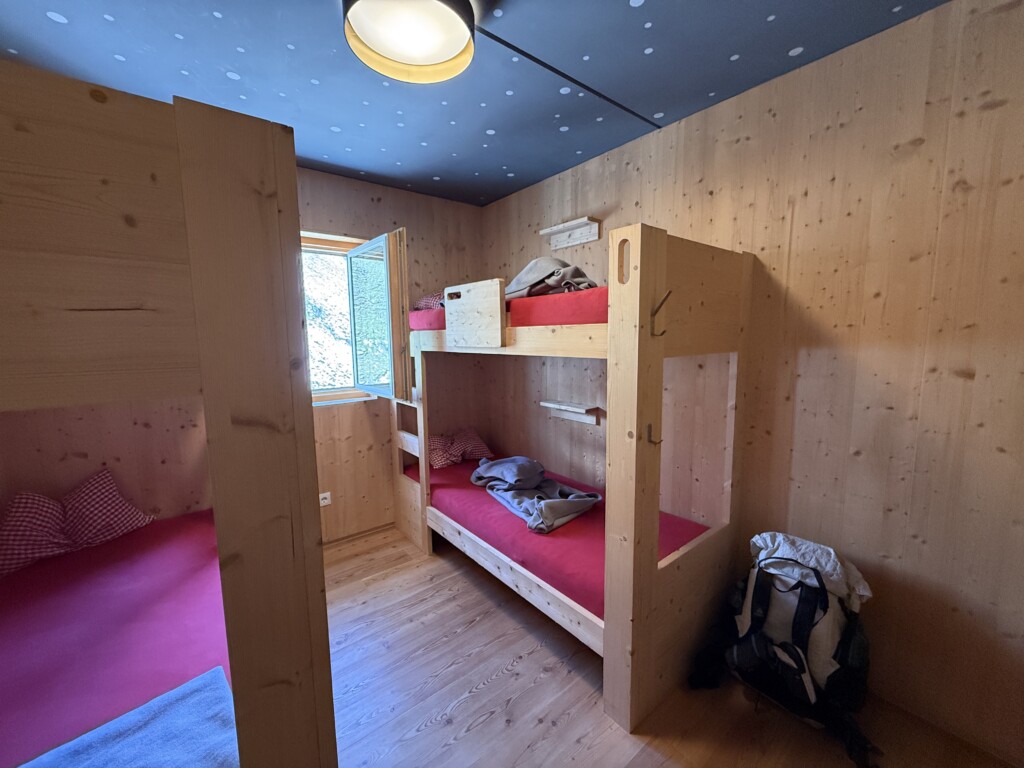
Most huts have multiple rooms with multiple bunk beds. Lamsenjochhutte and Karlwendalhaus just north of Innsbruck had single level beds in long lines. That felt luxurious, as in your mid 40s there may be a limit to your inner child wanting a bunk bed!
Sometimes we get allocated bunk or bed numbers, sometimes we get adjacent mattresses. Sometimes we can choose where we sleep in a room of beds. The width of the wooden steps and the heights of the top bunks varies wildly. Some upper bunk wooden steps are so narrow your feet get a free deep tissue massage going up and down. Some bunks are so high you seriously consider the consequences of falling!
If the hut is managed by the alpine club there are brown or blue blankets with ALPENVEIREN printed on them, with an Edelweiss. The pillows vary from gigantic soft things, to tiny sad little things (I used my own inflatable pillow that night).
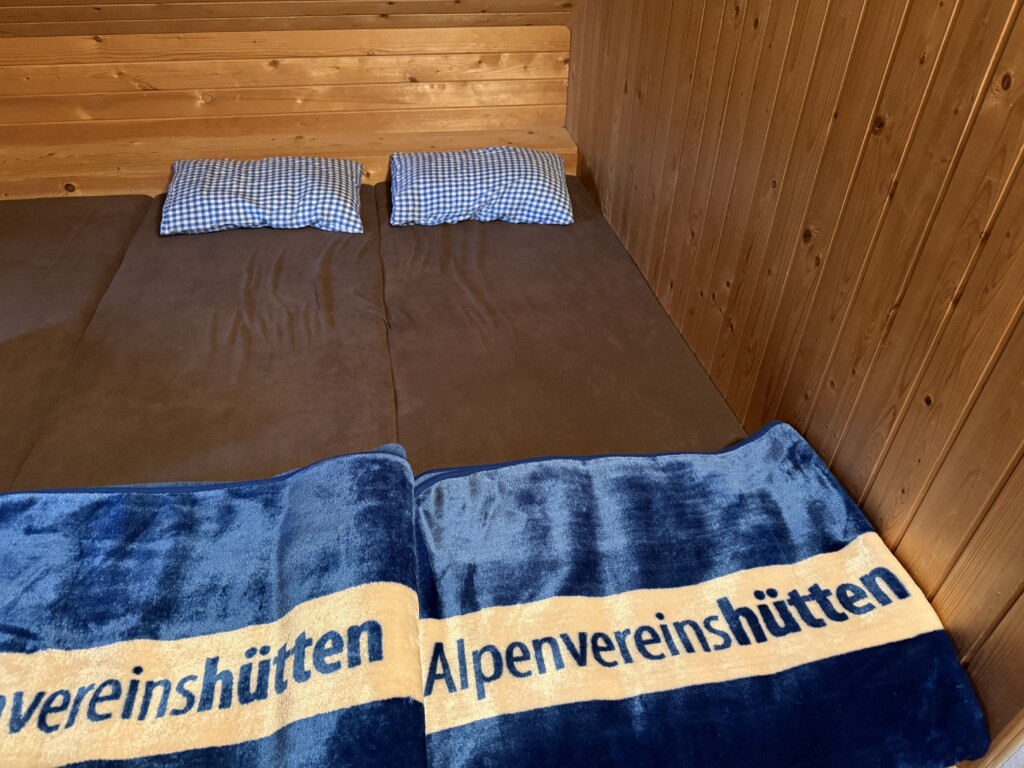
You absolutely must bring a sleeping liner. We have these anyway for camping, as it helps protect the down in the sleeping bags from getting too grotty. But they are very strict on this in the huts. Unlike NZ and Canadian huts the mattresses are covered in material not plastic. It’s quieter and more comfortable. A couple of huts have required us to microwave our liners. Bedbugs do like to hitch a ride and it wouldn’t take long to have a line of huts infested. Not sure of the effectiveness of the microwave on them, but it helps mentally!
When you leave in the morning, no matter what the time, you fold up the blanket and place it at the foot of the bed. One hut (Hochsteinwahaus) even had a printed guide on the wall on how to fold the blankets.
Bathrooms and water
Most huts have a shower or two. Cold is free* for as long as you like. Hot water can be anywhere from 1.50€ to 5€ for 3 minutes. You bring your own soap and towel. We use face towels (flannels) as our towels. The fancy outdoor microfibre ones are too big and never seem as absorbent; a flannel is small and can dry easily on thr top of your backpack.
All huts have had flushing toilets except Slovenia’s Zasavska koča na Prehodavcih, which had a long drop positioned away from the hut. All have had toilet paper – a welcome surprise compared to experiences in places like Paris where you better carry your own!
To our surprise (as original Australians) not many huts have rainwater storage. We even passed a hut (Falconhutte) that had no water – we were not staying there, but a few hikers passing us in the opposite direction told us to pick up extra water as there was none available. We think if tanks were installed they could easily be emptied for winter, and with the types of rain that accompanies the thunderstorms here in summer, a decent capacity of rainwater could be available.
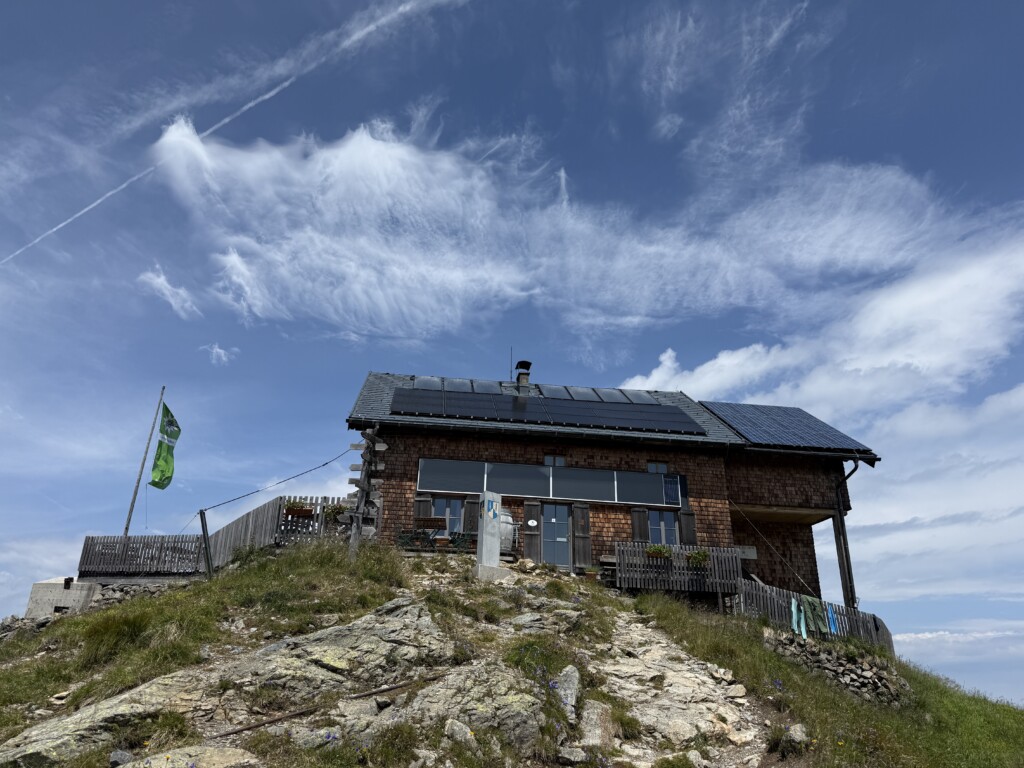
Many rely on a nearby lake, or a spring, sometimes running long polypipe from the source to the hut. No doubt water availability in the alpine will become an even bigger challenge in the coming years.
All this said, the aforementioned hut in Slovenia had a couple of beautiful large rainwater tanks attached to it. And little Kellerjochhutte near Innsbruck used bulky bins as rainwater tanks. Some education for locals on bringing a filter for drinking water would also help. Many European hikers rely on buying bottled water from the huts. In fact, Rastokogelhutte had a rule from the cook that no personal bottles with water were allowed to be visible on the tables in the dining room. Multiple tables including ours were told politely. We felt bad for the young waitress having to police a pretty interesting “rule”.
*Unless it’s Lamsenjochhutte, where I decided to have a cokd shower and it didn’t work at all! Huge thanks to the woman before me who dashed down to grab a token for me so I didn’t need to get dressed and go downstairs and back up etc. When nobody was at the desk to buy a token she just took one because she didn’t want me waiting for ages. Ha!
Other nuances
Every hut is different and run differently. The alpine club takes the “mattress money” aka the payment for the accommodation overnight. And then, from what we have observed, in the alpine club huts the food and drinks are outsourced and operated by a contractors. So you may pay €15 per person for a bunk per night as an alpine club member, but then blow €120 to get dinner and breakfast, along with a soda water and nonalcoholic beer, and a piece of cake. We figure the price of food makes sense relative to the logistics of getting it to the hut; however some road accessible huts were more expensive than alpine ones.
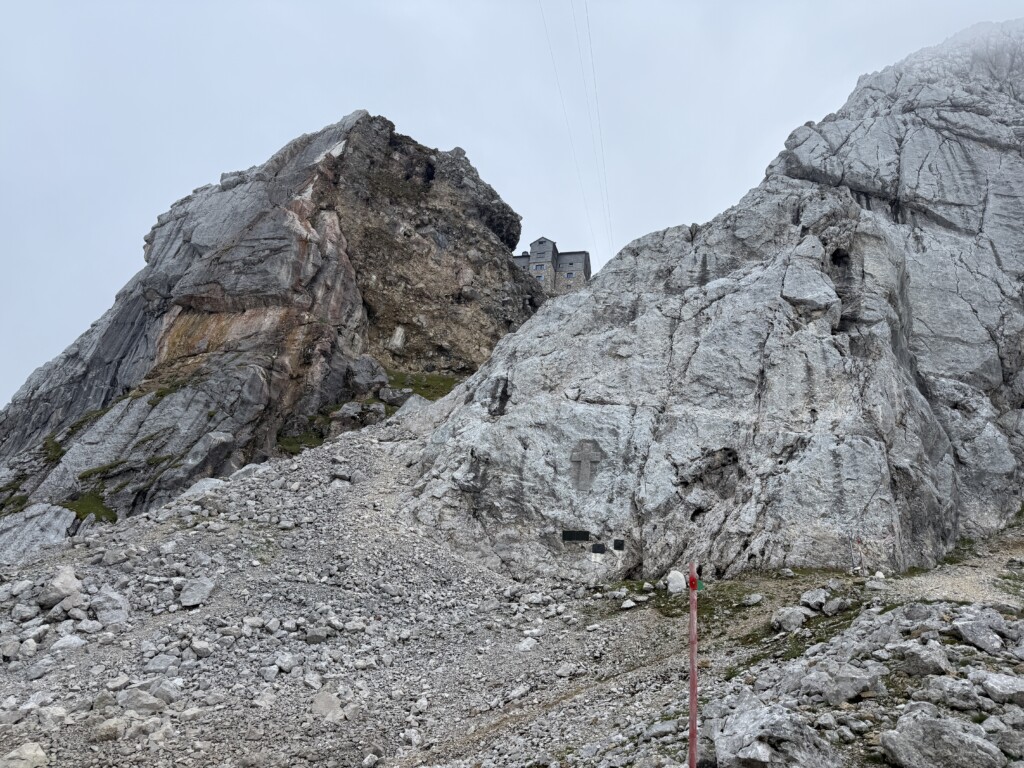
Breakfast can be anytime from 6am (yay we like that) to 7.30am (boo that puts the pressure on especially if early thunderstorms loom).
There is commonly a drying room and a shoe room. Sometimes these are combined. I do not recommend inhaling deeply amongst 50 odd pairs of hiking boots and shoes!
Portzehutte was a luxurious place with a huge kitchen and a friendly chef making giant amounts of bread for the following morning. We also liked Pfitzerjochhutte for its organization of self serve food, and the gigantic serving size of bolognese and schnitzel that we ordered.
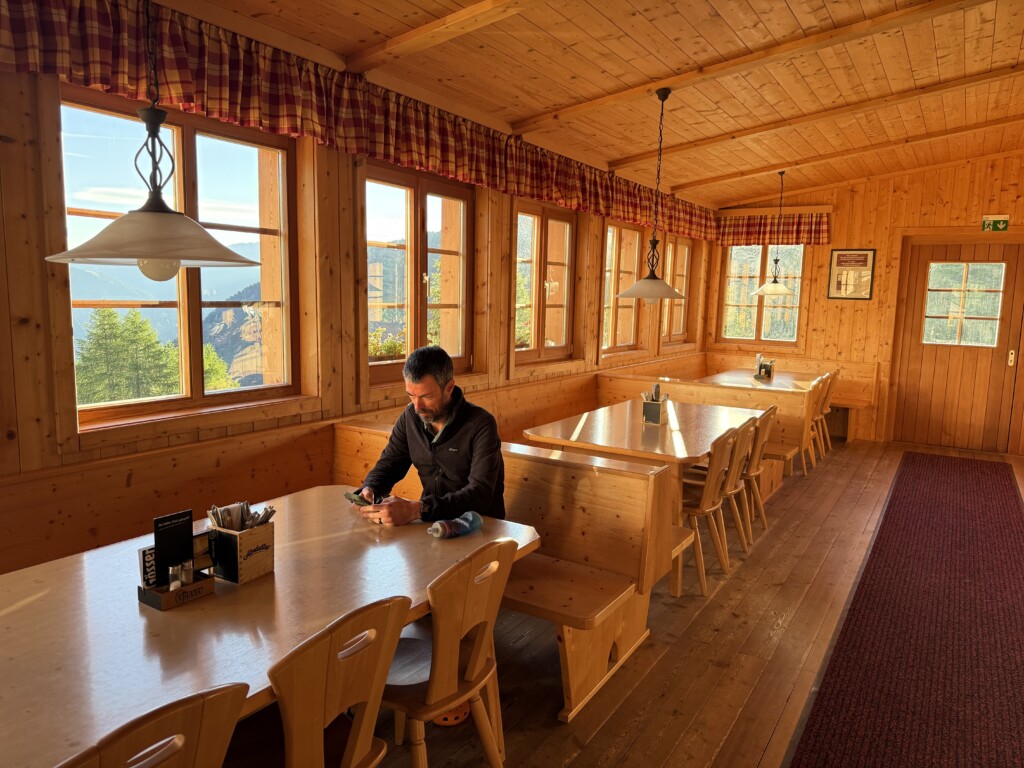
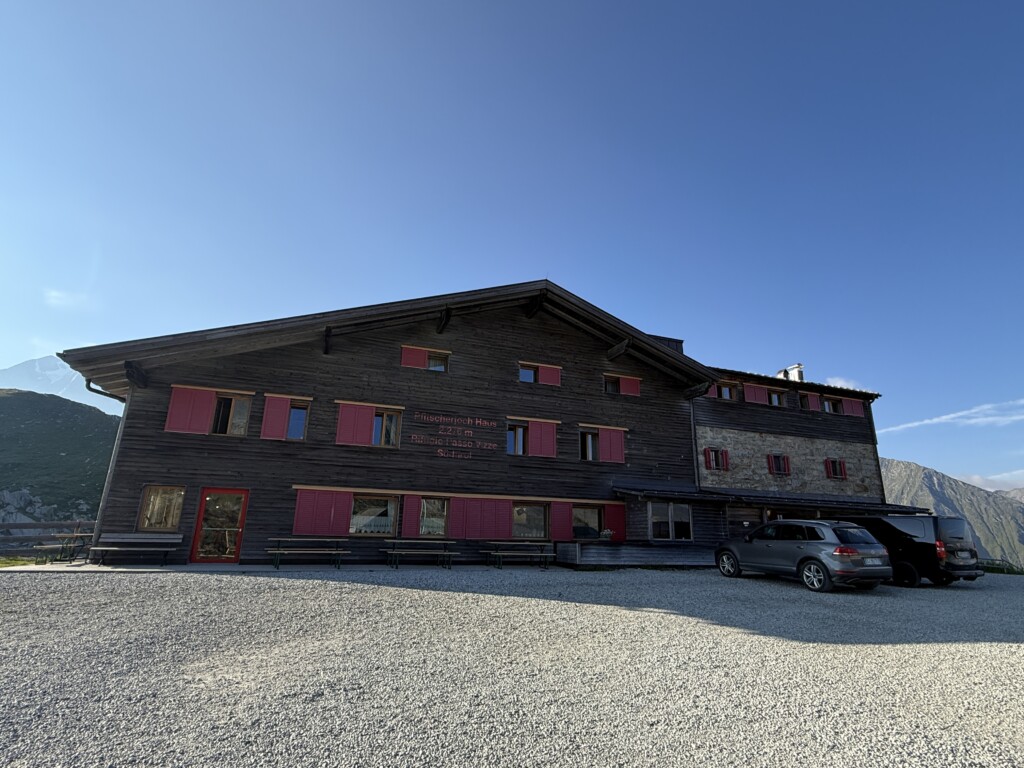
The food (omg the food)
Halbpension (half board) includes a three course meal for dinner (soup, main, dessert) and breakfast. Call it hiker hunger but I think every meal we have had in the huts has been good. Some have been outstanding.
Breakfast you get a ticket or a token the night before and hand that to someone before you self serve. Some will only provide a bowl or cup in return for the token/ticket making it impossible for folks to sneak in and help themselves.
Typically a breakfast spread includes meats, cheeses, breads, cereal/muesli, yogurt, and coffee and tea. Sometimes juices. Eggs are not common in the huts, nor is fresh fruit, and all the bread is fresh not toasted.
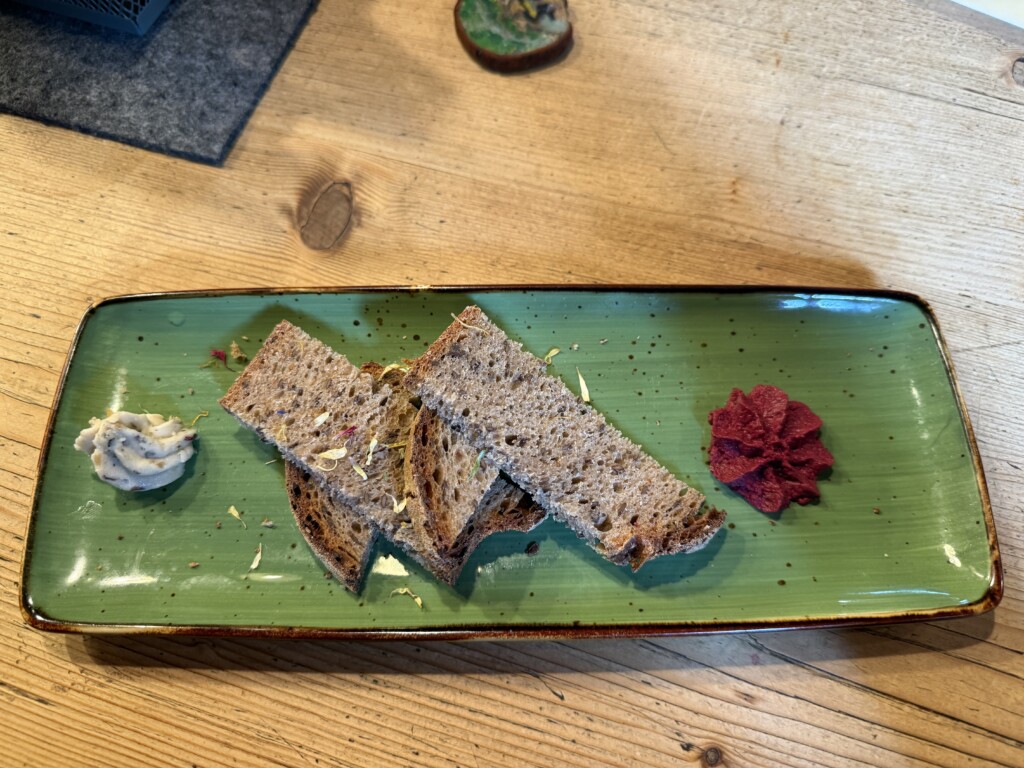
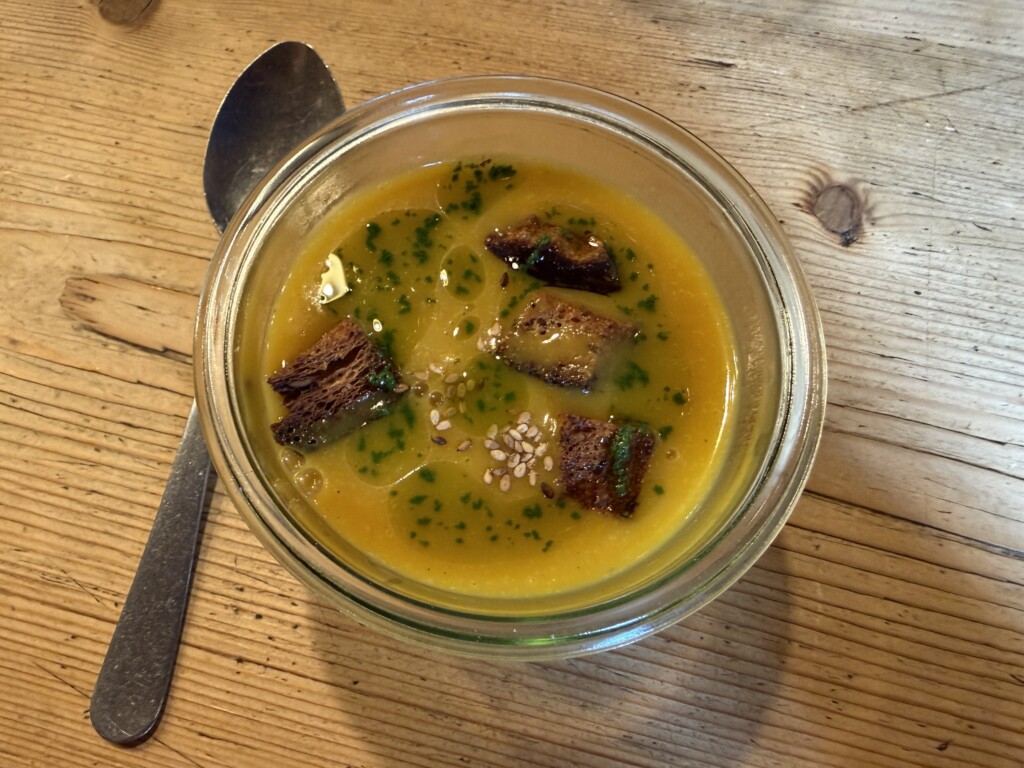
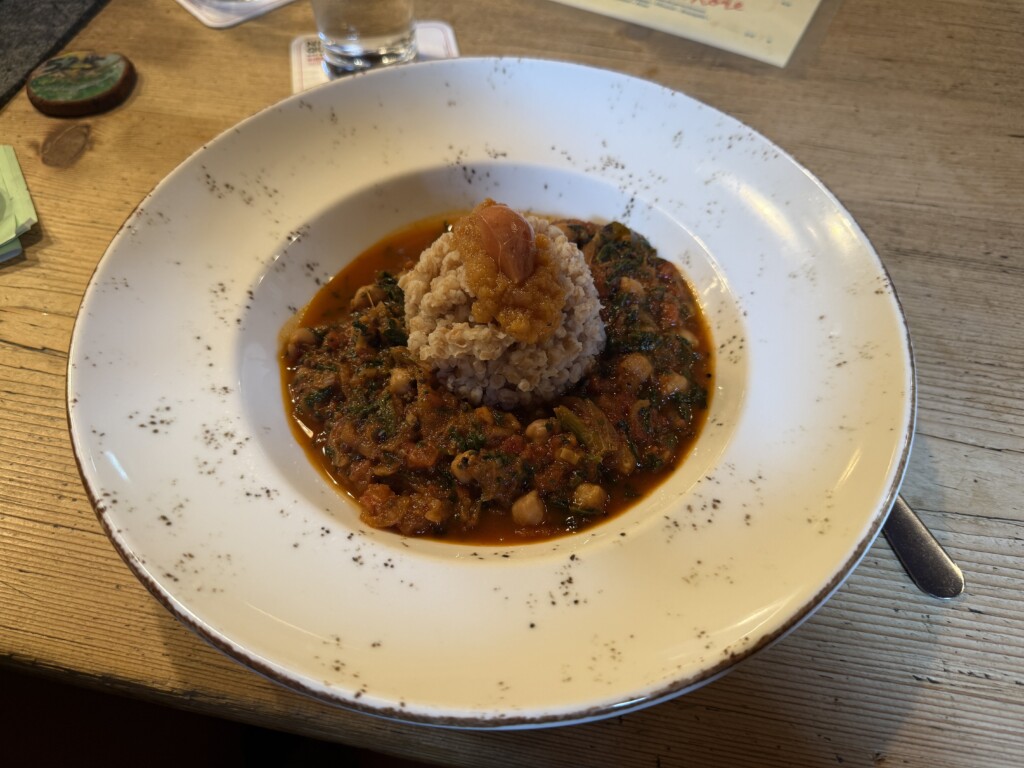
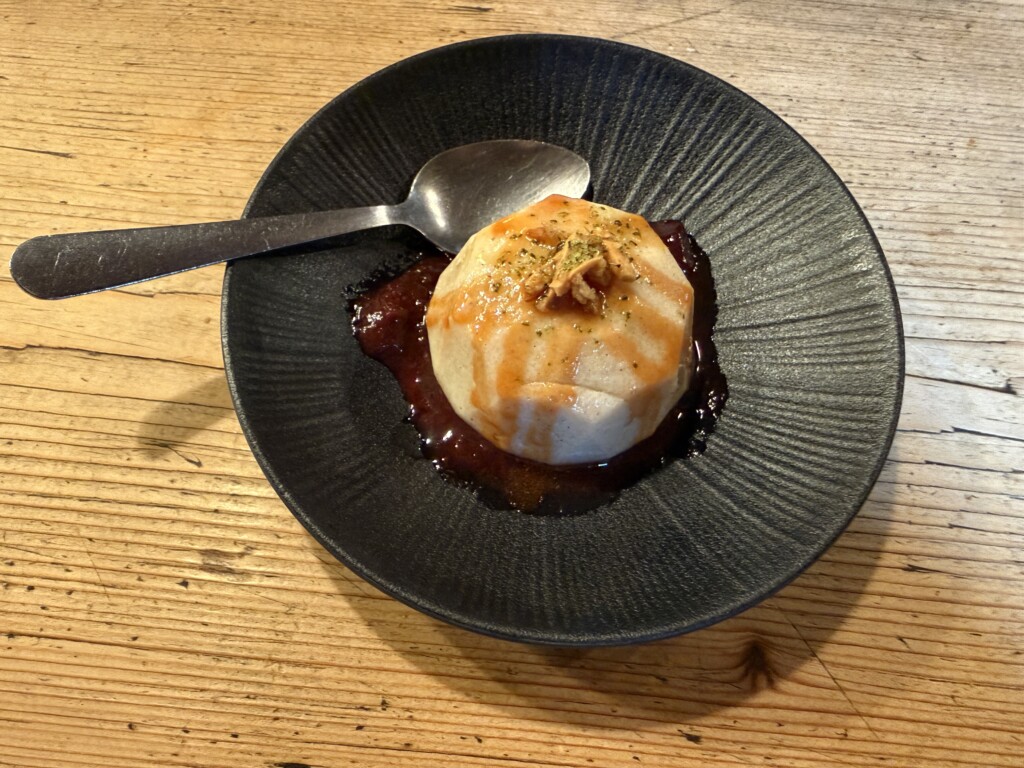
For lunches we haven’t had one at a hut. We carry our lunches, but we have stopped at the odd hut for “kaffee and kuchen”. The outstanding hut so far for that was Chemnitzerhutte where we, for some unknown reason, got our own pieces of cake instead of sharing one. Zero regrets! Their blueberry marble cake and apricot cream sponge roll were divine and powered us down the valley and up the other side!
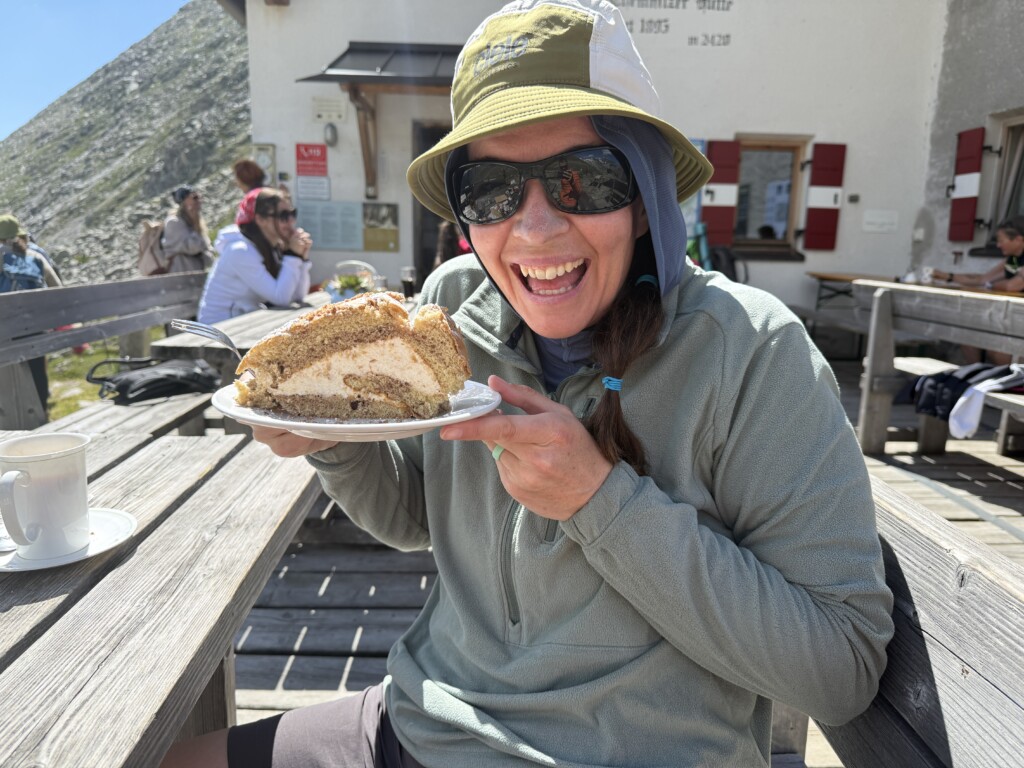
A close second as a snack stop was Rieserfernerhutte, which was cute and windblown and a welcome reprieve after a 1500m non-stop ascent. Their apfelstrudel is our #1 of the trip so far…
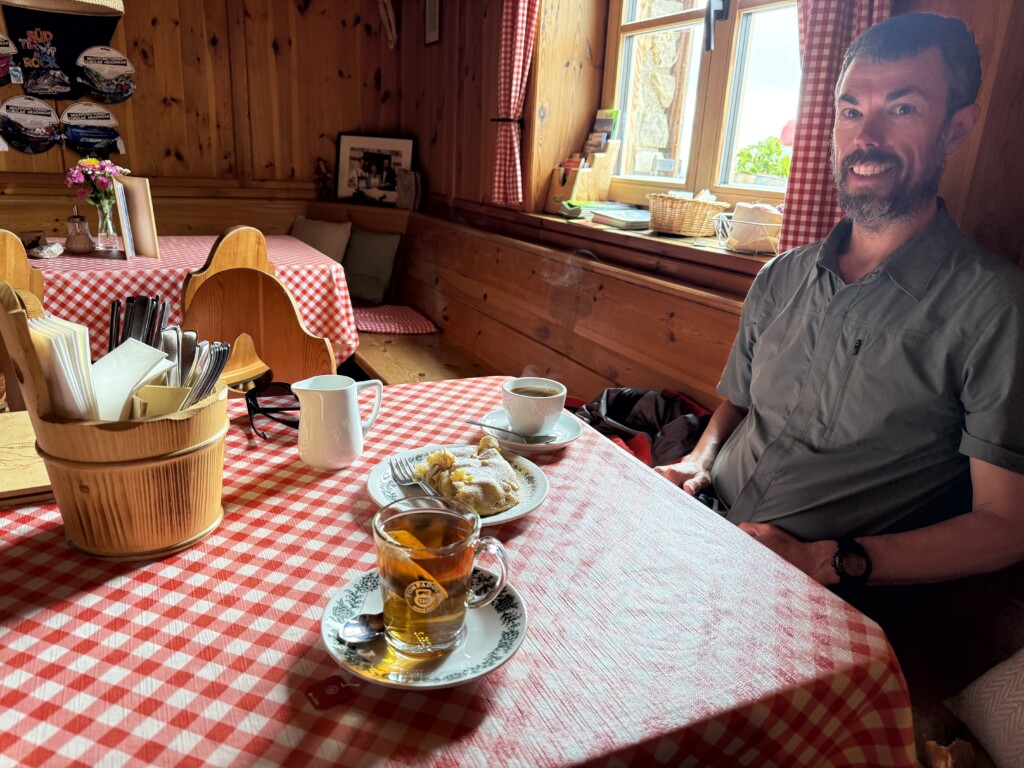
Dinners have been anything from basic and tasty spaghetti bolognese to bio organic culinary journies like at Reitlangerhutte. We were on on a waiting list for that hut – a launchpad for hikers doing Zugspitze (Germany’s highest peak) – and were lucky to get a spot a week before we arrived. Phew!
Potentially our favourite dinner so far has been at Refugio Del Nordio in Italy. They also gave us pens (adorable and we actually needed a pen!) We also loved our meal at Karlwendelhaus, a delivious lentil soul then roast beef with potato and salad, and I even emailed them to ask what kind of cake they served as the dessert! They replied (promptly I may add): “We’re making a regular sheet cake (sponge cake) and adding lingonberry jam to the batter. That’s what makes it so juicy.”
It’s impressive logistically as some of the huts would serve 60-70 people breakfast and dinner every day.
Closing thoughts
The huts may seem strict and some of the individual “rules” have been a little comical. But many of these huts have bought shelter and warmth and food and comfort to hundreds of thousands of hikers across Europe. They dot the ridges and passes, and make it possible to hike without a tent or sleeping gear (sadly we have to finish the trail faster than this allows – only a three month visa). They have grand images on the walls of pioneers in the mountains, posters about wildflowers, and proud certificates for using local produce.
What gets me is how much culture is baked into these huts. Sometimes the managers are third generation running the same lodge their grandparents did. There’s an unspoken code too: boots off and slippers or sandals on, quiet after dark, don’t waste the water, etc. No matter what country you’re from, there is a shared respect for the mountains and the people who’ve kept these places running for more than a century.
2 Comments
By Janine
Really enjoying your travel log!!! Same but different as the several trips I took with backpack and hostels! The accommodations/beds look similar, but of course your journey through the Alps is magnificent!!! Miss you! So glad you are safe/well/enjoying yourselves!
By Alpine Fuzzies
Glad it’s bringing memories back for you! There was even a hut with bed bugs where they had dogs come in the day before we arrived (detector dogs). Not the best experience haha! It’s hot here – in Vaduz this morning – but luckily we have some “easier days” ahead… Wave to our local mountains from us! 💖